Salvage and Rebuilt Titles: What They Mean for Resale, Insurance, and Financing
By Andy, Founder, TitlePull
Last updated May 4, 2026 · Reviewed by Andy · May 2026
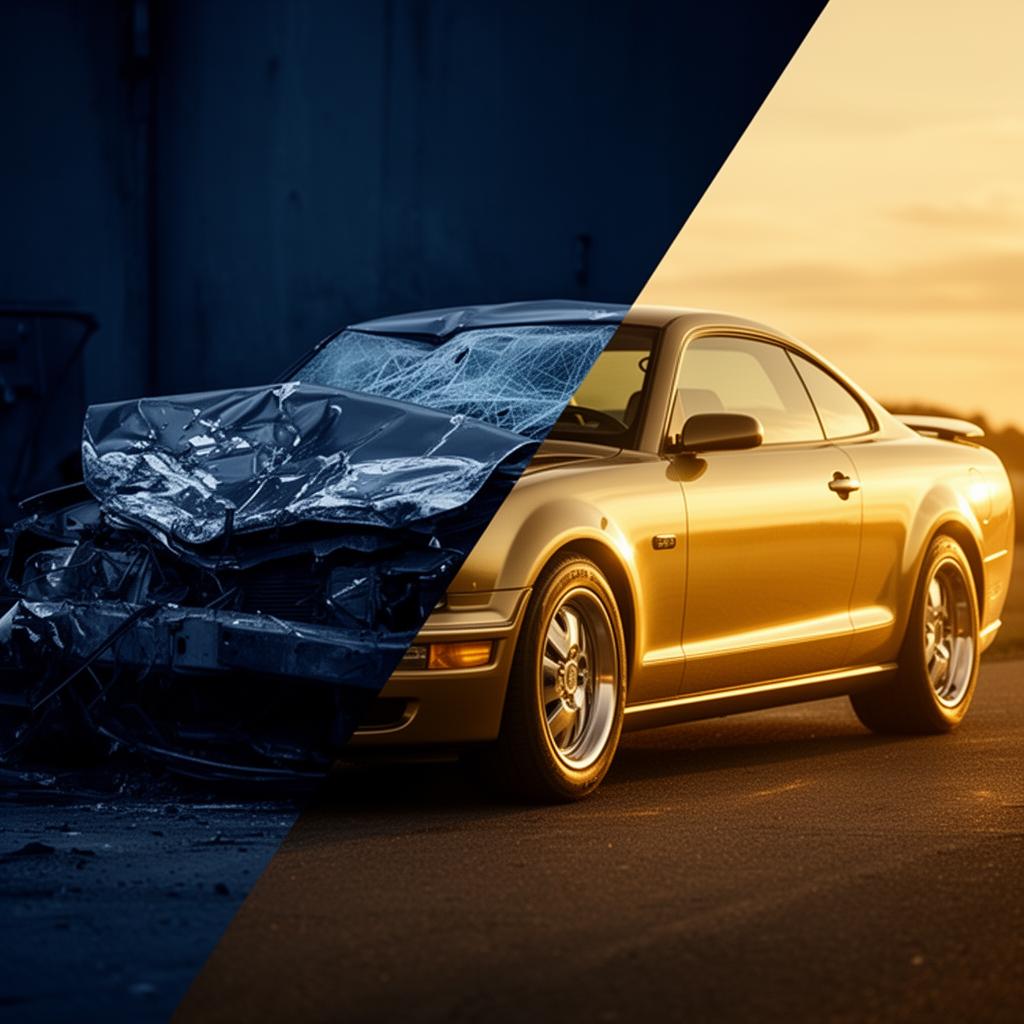
Federal title-record systems track dozens of distinct title-brand categories submitted by state DMVs, insurance carriers, and licensed salvage facilities. Two of those brands, Salvage and Rebuilt, appear on a small but meaningful share of vehicle history reports and account for one of the largest negative impacts on resale value of any brand category.
The two brands are routinely confused, including by sellers. Many private sellers of branded-title vehicles either don't realize the brand is on the title or don't disclose it during the sale. Federal odometer-disclosure law and state-level lemon-law statutes both require the brand to be displayed permanently on every future title for the vehicle's life.
This reference explains what each brand legally means, what each one costs the typical buyer over a five-year ownership period, and how either one appears on a vehicle history report.
What a Salvage Title Is
A salvage title is the brand a state DMV applies when an insurance company has declared a vehicle a total loss. The damage threshold varies by state, the cost to repair often must exceed roughly 70 to 90 percent of the vehicle's pre-loss value, depending on the state, but the result is the same: the vehicle is no longer street-legal and cannot be registered for road use.
A salvage-titled vehicle can be:
- Sold for parts to a licensed dismantler
- Dismantled at a salvage facility
- Repaired to the state's rebuilt-title standard and re-inspected for road use
The most common triggers documented in federal title records:
- Collision damage above the state threshold. Front-end collisions involving airbag deployment frequently trigger total-loss declarations because airbag replacement plus calibration runs $4,000–$6,000.
- Flood damage. Water damage above the dashboard line typically totals the vehicle because the electrical systems are not safely repairable.
- Theft recovery with damage. Vehicles recovered after extended theft windows or after damage during recovery are frequently totaled.
- Catastrophic hail events. Severe storms have been documented to total entire dealer inventories.
What a Rebuilt Title Is
A rebuilt title, labeled "reconstructed," "restored," or "prior salvage" depending on state, is the brand issued after a salvage-titled vehicle has been repaired and passed a state safety inspection. The vehicle is legally registerable and street-legal again.
The state inspection verifies that the repaired vehicle meets minimum operational standards. It does not certify repair quality. It does not guarantee that factory tolerances were maintained, that OEM parts were used, or that no future problems will surface. Industry quality varies widely:
- A rebuild performed by a body shop with experience in modern unibody construction, using OEM parts and proper post-repair calibration, can produce a vehicle that drives indistinguishably from a clean-title equivalent.
- A rebuild performed quickly with aftermarket parts and minimal calibration produces a vehicle that drives and passes inspection but can carry hidden, long-term reliability or safety problems.
How Both Brands Are Tracked Permanently
Federal title records preserve both brand events at the national level. State-level title documents may carry one, the other, or neither, depending on each state's brand-recognition rules. The federal record is comprehensive.
A vehicle that received a salvage brand in Florida and was later rebuilt and retitled in Georgia will appear on any complete vehicle history report with both events:
- Salvage, Florida DMV, March 2019 (example)
- Rebuilt, Georgia DMV, November 2020 (example)
This is the operational reason a federal-level vehicle history report exists. State DMV title checks alone can miss the original salvage brand if the current state does not recognize the originating state's specific brand category. The federal record cannot be washed.
What the Brands Cost Over a Typical Ownership
Industry market data shows the discount on rebuilt-title vehicles typically runs 20 to 50 percent below clean-title comparables, varying with vehicle, rebuild quality, and state. The discount paid at purchase approximates the discount paid at sale, meaning upfront savings net to roughly zero across a typical five-year ownership.
The actual cost premium of rebuilt-title ownership comes from three structural factors:
Insurance
Most major U.S. insurance carriers will not write comprehensive or collision coverage on rebuilt-title vehicles at full value. Among the carriers that will:
- Most cap maximum payouts at significantly below clean-title book value
- Several major carriers refuse to write any coverage on rebuilt-title vehicles, requiring buyers to source non-standard or specialty insurance at premium rates
- Coverage availability changes with state of registration and individual carrier underwriting policy
Buyers should obtain a written quote for the specific VIN from their specific insurer before purchase, not rely on general "rebuilt-title insurance is available" assurances.
Financing
Most banks, credit unions, and captive auto finance companies will not write a loan on a rebuilt-title vehicle. The lenders that will charge higher interest rates, typically two to five percentage points above clean-title rates. Over a five-year loan term, the interest rate differential can erase the upfront price discount entirely.
Resale and Trade-In
Franchise dealers frequently decline to take rebuilt-title vehicles on trade. When they do, the trade offer is closer to wholesale parts value than to clean-title book value. Private buyers ask more questions during negotiation; the listing window is longer; the closing price tends to be at a steeper discount than the original purchase savings would suggest.
When Rebuilt-Title Ownership Is Cost-Effective
Industry data supports rebuilt-title purchase as cost-effective under specific conditions, all of which need to be true:
- Cash purchase. Financing erases the discount through interest-rate differentials.
- Verified insurance coverage at acceptable terms, written, VIN-specific, not general assurances.
- Repair quality verified by a mechanic experienced with rebuild inspection, body and frame inspections, suspension alignment verification, post-repair electronic calibration confirmation.
- Long ownership horizon. Multi-year ownership amortizes the resale-value penalty.
When all four conditions are satisfied, rebuilt-title ownership can be 25 to 30 percent less expensive over a long ownership than a clean-title equivalent. When one or more conditions are in question, the savings are typically illusory.
For most buyers, particularly buyers who plan to finance, plan to resell within a few years, or have not confirmed insurance coverage in writing, filtering rebuilt-title vehicles out of the search and paying the clean-title premium is the more cost-effective strategy.
How the Brands Appear on a Vehicle History Report
When a vehicle has carried both brands, the report renders both events. A typical sequence in the Title Brands section:
REBUILT, Reported by Georgia DMV on March 14, 2024. A previously salvaged vehicle that has been repaired and passed a state re-inspection.
And in the Salvage and Insurance Records section, the underlying event:
Sold to salvage auction, January 22, 2024.
If the report shows a salvage event but no follow-up rebuilt brand, the vehicle should not be on a public road. That outcome is a hard signal regardless of price.
Title-Washing Across State Lines
The most common mechanism for salvage history disappearing from a state-level title document is interstate title-washing:
- Salvage event occurs in State A
- Vehicle is moved to State B, whose DMV does not recognize State A's specific brand category
- State B issues a clean title
- Vehicle is sold in State C with what appears to be an unbranded title
A federal-level vehicle history report catches this because the original brand from State A is preserved at the national level even when the State B title document does not carry it forward. This is the operational reason a comprehensive vehicle history report is necessary; a state DMV title check alone is not sufficient.
Title-washing occurs most frequently in vehicles whose current title was issued recently in a state different from the historical title pattern. Particular attention is warranted when a vehicle's most recent title is from Florida, Texas, or another high-volume used-vehicle market and the prior history is in a state with stricter brand-recognition rules. The same elevated scrutiny applies for trucks and certain SUVs where commercial-use rebuilds are more common.
A TitlePull vehicle history report, $9.99 flat is the single most reliable way to surface a salvage or rebuilt brand the seller did not disclose, even when the current title looks clean.
Sources
- U.S. DOT Federal Highway Administration, Highway Statistics: https://www.fhwa.dot.gov/policyinformation/statistics/2023/
- NHTSA, Changes to Odometer Disclosure Requirements: https://www.nhtsa.gov/press-releases/consumer-alert-changes-odometer-disclosure-requirements
- 49 U.S.C. §32710, Odometer fraud penalties: https://www.law.cornell.edu/uscode/text/49/32710
- Cox Automotive, U.S. used-vehicle market data: https://www.coxautoinc.com/market-insights/
- Federal Trade Commission, Buying a Used Car: https://consumer.ftc.gov/articles/buying-used-car-dealer
Frequently asked questions
Can a rebuilt title ever become a clean title?
No. Once a vehicle has carried a salvage or rebuilt brand, that history follows the VIN forever. Some states use slightly different label words, 'reconstructed,' 'restored,' 'prior salvage', but the underlying brand is preserved at the federal level.
Are rebuilt cars dangerous?
Not inherently. A rebuilt car has been repaired and passed a state safety inspection. The risk is variation in repair quality. Some rebuilds are excellent; some are barely adequate. The only way to know is a thorough pre-purchase inspection by a mechanic experienced with rebuilt vehicles.
Will my insurance company cover a rebuilt-title car?
Most insurers will cover it for liability and basic coverage. Many will not write comprehensive or collision coverage at full value, and some won't write it at all. Get a written quote from your specific insurer before you buy.
Disclosures
TitlePull is not a consumer reporting agency under the Fair Credit Reporting Act. Reports are for informational purposes and may not be used for employment, tenant, credit, or insurance underwriting decisions.
Get the full vehicle history for $9.99.
Check a VIN