VIN Inspection Requirements by State
By Andy, Founder, TitlePull
Last updated September 21, 2026 · Reviewed by Andy · September 2026
Which states require a VIN inspection?
There is no national answer, and anyone who gives you a single number is guessing. VIN inspection requirements are set state by state, and the triggers differ enough that a rule which is true in Kansas is false in Texas.
What is consistent is the purpose. A VIN inspection is a physical check that the number stamped on the car matches the number on the ownership document. It exists to catch stolen vehicles, cloned VINs, and paperwork that does not belong to the metal it is attached to. It is not a mechanical inspection and it tells you nothing about the condition of the car.
If you are buying out of state, this is the step most likely to surprise you, because it happens after the sale, at your own state's counter, and you cannot fix it remotely once the car is already home.
What a VIN inspection is, in plain terms
A VIN inspection confirms the vehicle identification number on the car matches the number on the title or ownership document.
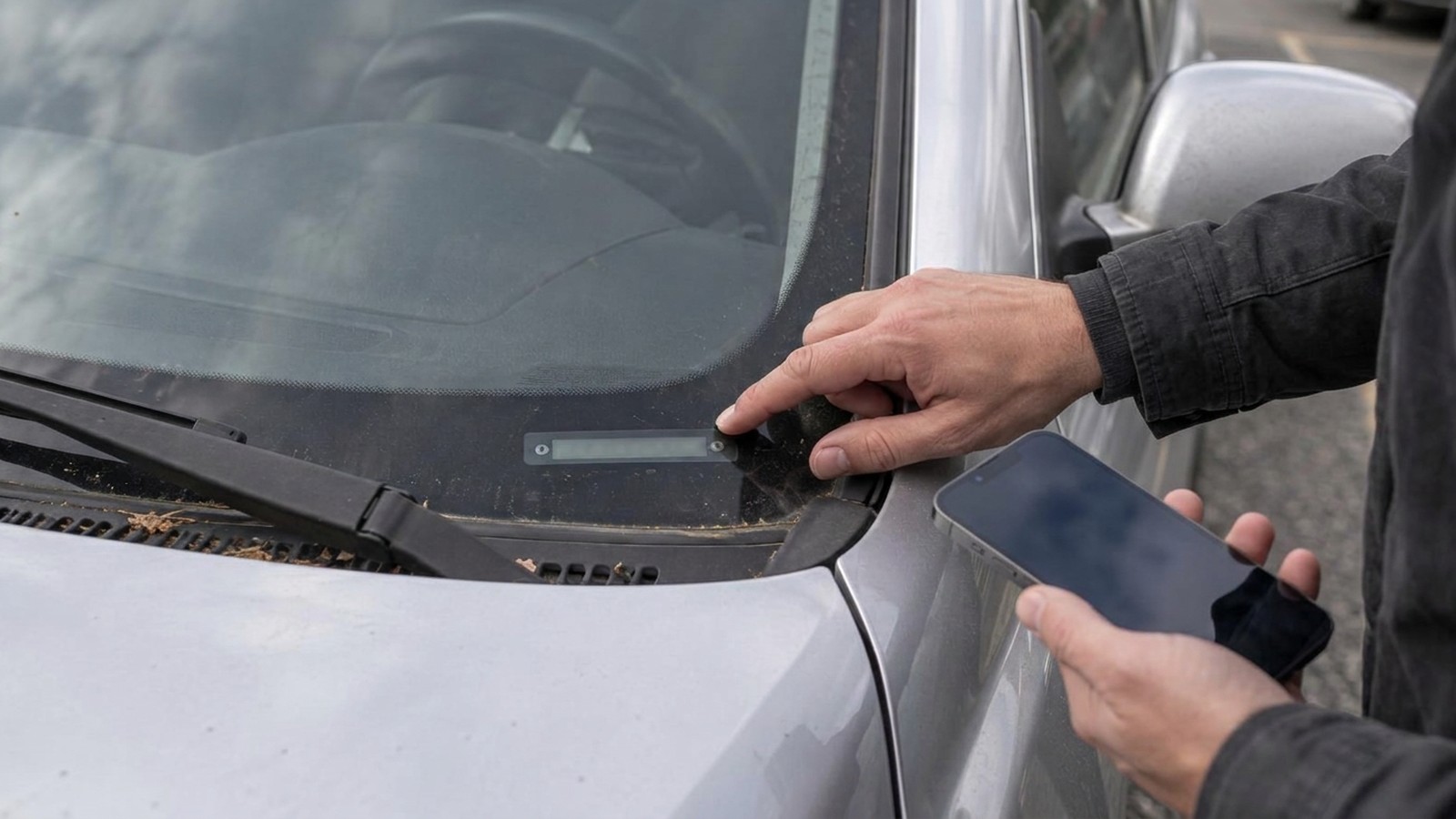
Oregon's DMV puts it in exactly those words. In practice, an inspector looks at the VIN plate visible through the windshield, often checks a second location such as the door jamb sticker, confirms the characters match the paperwork in your hand, and signs a form. For an ordinary car it takes a few minutes.
A handful of states run a deeper version for certain vehicles. Colorado's certified inspection adds discreet VIN checks and theft database checks and can only be completed by a P.O.S.T. certified inspector. Arizona's Level III inspection verifies the major component parts on a restored salvage vehicle, meaning the front-end assembly, engine, transmission and, for trucks, the rear-end assembly. Those are different animals from a two-minute number check, and they are covered further down.
If you want to understand what the number itself encodes before you go, the free VIN decoder breaks a VIN into its make, model year, plant and body details.
VIN inspection rules in ten states
Requirements fall into three rough groups: states that inspect nearly every out-of-state vehicle, states that inspect only when something is missing or unusual, and states that accept a lighter form of verification.
States that inspect out-of-state vehicles as a matter of course
Kansas. An inspection is required when a vehicle has a title from a state other than Kansas or a foreign country, when it has been assembled or reconstructed from one or more vehicles, or when the proper identification number is in doubt. The Kansas Highway Patrol describes the inspections as conducted by trained law enforcement personnel employed by the Patrol or by designated law enforcement agencies. A regular inspection costs $20, and a salvage inspection costs $25. Brand-new vehicles still on a manufacturer's statement of origin are exempt.
Delaware. Every out-of-state vehicle passes through a DMV lane before a Delaware title will issue. Vehicles seven model years old or newer that were purchased out of state have the VIN verified; all other vehicles are inspected at a DMV inspection lane. Delaware performs the inspections at no fee, which makes it one of the friendlier states on this list.
Oregon. A VIN inspection is required for out-of-state or out-of-country titled vehicles, for vehicles being titled as totaled and assembled, reconstructed or replica, and for Oregon salvage-titled vehicles applying for a regular title. The fee is $9. DMV offices, licensed Oregon dealers at the point of sale, and in some cases the Department of Environmental Quality can perform it.
Wyoming. The title application states that an inspection is required when the prior title is from a state other than Wyoming, and that it is not required for a manufacturer's statement of origin. State law sets the fee at $10 per vehicle identification number inspected and extends the requirement to homemade, rebuilt, reconstructed and kit vehicles, and to any vehicle for which a bond is required. In Wyoming the inspection may be done by a state law enforcement officer or by a licensed Wyoming dealer for vehicles in that dealer's inventory.
Missouri. Missouri requires an identification number and odometer inspection when ownership was transferred to you on a title issued by another state or country. Note the second half of that: Missouri verifies the odometer reading as well as the VIN, which not every state does. The inspection is completed at a Missouri authorized inspection station, and a safety inspection no more than 60 days old satisfies the requirement.
Nevada. Nevada's rule is broader than out-of-state. An inspection is required on all vehicles that have never been registered or titled in Nevada. Inspections at a full-service DMV office are free and need no appointment, and authorized businesses or a sworn officer can also complete the certificate.
States that inspect only in narrower circumstances
Arizona. Arizona uses three levels. A Level I inspection matches the VIN to the ownership documents and is conducted for title-only requests, bonded titles, and some out-of-state or out-of-country vehicles without proof of title or registration. There is no fee for a Level I at an MVD office. So an ordinary out-of-state car with clean paperwork usually does not need one, which is the opposite of what several summaries claim.
Montana. Montana's motor vehicle division states there are two stages of VIN inspection, not three. Stage I applies when the identity of the vehicle is in question, or for a Canadian registration or a bonded application. Stage III is required on all vehicles with an out-of-state or Montana salvage certificate. Read literally, Montana's requirement attaches to salvage certificates rather than to an ordinary clean out-of-state title.
States that accept a lighter verification
Pennsylvania. Pennsylvania requires the VIN to be verified for all vehicles previously titled in another state, but it accepts a VIN plate tracing attached to the application rather than a state-run inspection. Where a tracing is not possible, a certified inspection mechanic or a notary public employed by a dealer or issuing agent may visually verify it, and a signed, dated photo of the VIN plate is acceptable. A vehicle sitting outside Pennsylvania can be verified by a police officer or by a dealer's mechanic on a separate form. Pennsylvania's separate safety inspection requirement is a different obligation and should not be confused with this one.
Texas. This is the one most often reported incorrectly. For a vehicle purchased in another US state, the Texas DMV instructs applicants that if the vehicle is not subject to a commercial or emissions inspection, they self-certify the vehicle identification number on Form 130-U. The law enforcement VIN inspection on Form VTR-68-A appears under the path for vehicles purchased outside the United States, where the vehicle must be inspected by a trained auto theft investigator who is a law enforcement officer, or by an authorized employee of the National Insurance Crime Bureau. If you have read elsewhere that Texas requires a police VIN inspection for a car you bought in Oklahoma, that is not what the state says.
Two things almost every online summary gets wrong
The two errors worth naming are the Texas inspection and the phantom Montana Stage II.
The first is the Texas claim above. The second is the widely repeated idea that Montana runs Stage I, II and III inspections and that Stage II applies to out-of-state vehicles. Montana's own page says there are two stages, and the out-of-state trigger it publishes is tied to a salvage certificate.
There is a third error worth flagging, which is the count itself. You will see confident figures for how many states require a VIN inspection on out-of-state transfers. The American Association of Motor Vehicle Administrators, which is the closest thing to a national authority on titling practice, publishes a policy position urging jurisdictions to include a VIN inspection in the titling process but does not publish a count. No federal source publishes one either. Every number in circulation traces back to a secondary site rather than to a government one, which is why this article names the states it verified and does not offer a total.
The reason the count is slippery is that the requirement is not binary. Arizona conditions it on missing documents. Montana conditions it on salvage status. Texas lets most buyers self-certify. Pennsylvania accepts a pencil rubbing. Lumping all of those into "requires an inspection" or "does not" loses the part you actually need.
Salvage and rebuilt vehicles face a different inspection
Several states impose a separate, tougher inspection before a previously salvaged vehicle can be titled for the road, and the fee and scope both jump.
- Arizona Level III. Required when a vehicle is restored salvage, a recovered stolen vehicle, or has been involved in a collision. It can only be conducted by a peace officer at an ADOT enforcement location, costs $50, and verifies all major component parts and that the vehicle is equipped for highway use.
- Kansas salvage inspection. $25, and it asks for supporting documentation: parts receipts, repair work orders, pre-repair damage photos, and the VINs of donor vehicles for used parts.
- Colorado certified inspection. Required for rebuilt or salvage vehicles, bonded titles, kit and custom-built vehicles, and assigned VINs. Performed only by a P.O.S.T. certified inspector.
- Montana Stage III. Required on all vehicles with an out-of-state or Montana salvage certificate. State law sets a salvage vehicle inspection fee of $18.50.
- Wyoming. State law extends the VIN inspection requirement to rebuilt, reconstructed, homemade and kit vehicles, and to any vehicle requiring a bond.
That pattern is worth understanding before you buy. If a seller is offering a rebuilt vehicle and tells you the paperwork is straightforward, the inspection regime in your state may disagree. Our salvage check guide and the salvage vs rebuilt title explainer cover what those brands mean for value and insurability, and how much a salvage title lowers value covers the financial side.
What a VIN inspection will not catch
A VIN inspection confirms the number matches the paper in front of the inspector. It does not tell you what that number's history says.
This is the gap that catches private buyers. An inspector standing at the DMV counter is checking whether the VIN on your car matches the VIN on your out-of-state title. They are not telling you whether that VIN has a total loss record in another state, an odometer discrepancy, an open safety recall, or a title brand that was dropped when the car crossed a state line. Those are separate records, and the inspection does not surface them.
That last one is the real risk in an out-of-state purchase, because moving a car between states is exactly how a brand gets lost. A car branded salvage in one state can be retitled in another and come back looking clean, which is the pattern known as title washing. Our guide to checking whether a title is clean and the title check guide walk through what to look for.
The practical sequence for an out-of-state purchase is: check the VIN's title and brand history before you travel, check open recalls while you are at it, then handle the state's inspection requirement once the car is home. A $9.99 TitlePull report covers the first part in a couple of minutes, with no account to create, and returns title brand records, total loss and salvage records, odometer history and open recalls in plain English.
A short checklist before you buy out of state
- Look up your own state's requirement first. Go to your state motor vehicle agency's own site rather than a summary. The triggers, the fee and who may sign vary.
- Download the inspection form before you travel. Several states will accept an inspection performed out of state on their own form. Doing it while you are standing next to the car is far easier than arranging it afterward.
- Find out who can sign it. A law enforcement officer, a licensed dealer, a DMV employee and a notary are all valid in some states and invalid in others.
- Check the VIN's history before you go, not after. The inspection verifies the number. It does not verify the record behind it.
- Ask whether the car has ever been branded. If the answer involves the words salvage, rebuilt or reconstructed, expect a longer and more expensive inspection in several states.
- Budget the fee, and the appointment. The money is trivial. The scheduling is not. Several states run these by appointment only and subject to officer availability.
The bottom line
The VIN inspection is a small administrative step with an outsized ability to stall a title transfer, and the rules genuinely differ from state to state in ways the common summaries flatten. Verify your own state's requirement at the source, get the form signed while you still have access to the car, and do not let a passed inspection stand in for knowing the vehicle's history.
Those are two different questions. One asks whether the number on the car matches the number on the paper. The other asks what that number has been through. A $9.99 TitlePull report answers the second one before you commit.
Sources
- Oregon Department of Transportation, Driver and Motor Vehicle Services, Vehicle Identification Number (VIN) Inspections
- Kansas Highway Patrol, Regular VIN Inspection and Salvage Vehicle VIN Inspection
- Colorado Division of Motor Vehicles, VIN Inspections
- Montana Motor Vehicle Division, VIN Inspections; Montana Code Annotated 61-3-223
- Missouri Department of Revenue, Motor Vehicle Titling and Registration
- Texas Department of Motor Vehicles, Out of State and Imported Vehicles
- Nevada Department of Motor Vehicles, Registering a Vehicle Purchased from a Private Party
- Wyoming Department of Transportation, Titles, Plates and Registration
- Pennsylvania Department of Transportation, How to Title and Register Your Out-of-State Vehicle in Pennsylvania
- Arizona Department of Transportation, Vehicle Inspections and Types of Vehicle Inspections and Fees
- Delaware Division of Motor Vehicles, Titling an Out-of-State Vehicle and Vehicle Inspections
- American Association of Motor Vehicle Administrators, Policy Position on VIN Inspection
State titling requirements change. Verify the current rule with your own state's motor vehicle agency before relying on it. This article is general information, not legal advice.
Frequently asked questions
What is a VIN inspection and what does it actually check?
A VIN inspection is a physical examination of the vehicle to confirm that the vehicle identification number on the car matches the number on the title or other ownership document. Oregon's DMV defines it in exactly those terms. It is an identity and anti-theft check rather than a mechanical one, so passing it says nothing about whether the car runs well, and failing to distinguish the two is a common source of confusion. In most states the inspector looks at the dashboard VIN plate visible through the windshield and often a second location such as the driver door jamb, confirms the characters match the paperwork, and signs a form. It usually takes a few minutes. Some states go further for certain vehicles. Colorado's certified inspection, used for rebuilt and salvage vehicles, adds discreet VIN checks and theft database checks and is performed only by a peace officer trained for it. Arizona's Level III inspection verifies the major component parts on a restored salvage vehicle, which is a different and much more involved exercise.
Do I need a VIN inspection if I buy a car in another state?
Often yes, but it depends entirely on the state you are titling the car in, and the rule is not the same everywhere. Kansas requires an inspection whenever a vehicle carries a title from another state or country. Wyoming's title application says plainly that an inspection is required when the prior title is from a state other than Wyoming. Delaware runs every out-of-state vehicle through a DMV lane before it will issue a title. Oregon requires one for out-of-state and out-of-country titled vehicles. Missouri requires an inspection that verifies both the VIN and the odometer reading. Pennsylvania requires VIN verification, though it accepts a pencil tracing of the VIN plate rather than a state inspection. Others are narrower. Arizona generally asks for a Level I inspection only when proof of title or registration is missing, or for title-only and bonded cases. Montana's inspection requirement attaches to salvage certificates rather than to ordinary out-of-state titles. Check your own state's motor vehicle agency before you plan the trip, because the answer varies more than most summaries admit.
Can a VIN inspection be done in a different state from where I am titling the car?
Frequently yes, and this matters a lot if you are buying a car far from home. Oregon allows the inspection to be completed by another state's DMV, by a law enforcement officer, or by military police, a commanding officer or a provost marshal for military personnel, and Oregon charges no fee for an inspection performed in another state, though the inspecting state may. Wyoming allows an inspection outside Wyoming by an authorized law enforcement officer of a city, county or state agency, or by a commissioned officer at a federal military installation. Pennsylvania allows a vehicle sitting outside the state to have its VIN visually verified by a police officer, by a mechanic employed by a motor vehicle dealer, or by an armed forces provost marshal, using its own form. The practical takeaway is to download your home state's inspection form before you travel, take it with you, and get it signed while you are standing next to the car, rather than discovering the requirement after the vehicle is already home.
Disclosures
TitlePull is not a consumer reporting agency under the Fair Credit Reporting Act. Reports are for informational purposes and may not be used for employment, tenant, credit, or insurance underwriting decisions.
Get the full vehicle history for $9.99.
Check a VIN