What Is a Flood Title?
By Andy, Founder, TitlePull
Last updated August 31, 2026 · Reviewed by Andy · August 2026
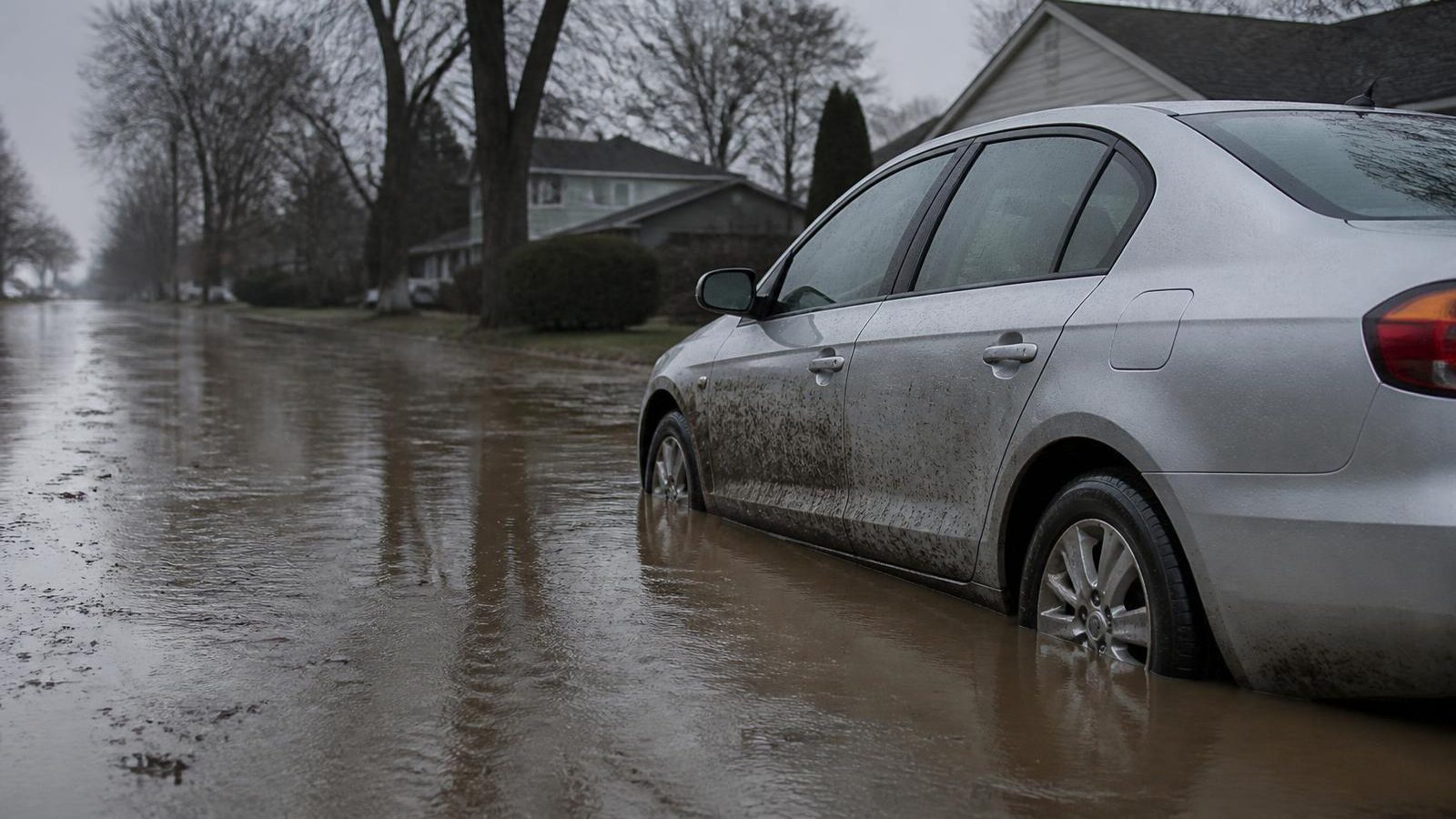
What is a flood title?
A flood title is a permanent brand a state places on a vehicle's title to record that the car was damaged by water severely enough to be declared a total loss. Once the brand is applied, it is supposed to follow the car for life, printing on each new title the vehicle receives, in any state, no matter how many times it changes hands.
The word on the document varies by state. Some print flood. Some print water damage. Wisconsin, for example, applies a specific flood damage brand, while other states record a flood loss under their general salvage brand. Whatever the wording, the message to a buyer is the same: this car spent time in water it was never designed to survive, and someone with a financial stake decided it was not worth fixing at full value.
That last part is worth underlining. A flood brand is not a note that a car got rained on. It is a record that an insurance company looked at the damage, ran the numbers, and paid the owner for the whole car.
How a car ends up with a flood title
The path is usually short. A storm floods a neighborhood, a parking lot, or a dealership. The owner files a claim. The insurer inspects the car, estimates the repair cost, and compares it to the car's value. When the repair math fails, the insurer pays out the claim, takes the car, and applies to the state for a salvage or flood branded document. From there the car typically goes to a salvage auction.
At the auction, three kinds of buyers show up: dismantlers who want parts, rebuilders who intend to repair and rebrand the car legitimately, and a third group the system exists to defend you against. That group buys flood cars cheap, cleans them cosmetically, and works them back into the used market in places where nobody remembers the storm.
Our post on how a totaled car can end up with a clean title explains the paperwork gaps that make that possible, and car title types explained covers where the flood brand sits among the other brands you might see.
Why flood damage is the damage that keeps giving
Collision damage announces itself. Flood damage waits.
Water, especially salt water or muddy storm water, gets into wiring harnesses, connectors, fuse boxes, control modules, seat motors, and the sensors that run a modern car's safety systems. The car can be dried, shampooed, and detailed into showroom smell, and then the corrosion does its work quietly for months. The National Highway Traffic Safety Administration cautions that a flooded vehicle should be fully assessed before it is even started, because there could be damage that is not visible.
Hybrids and EVs raise the stakes further. NHTSA's guidance on flood-damaged vehicles warns that water-damaged high-voltage batteries can short circuit and cause vehicle fires, and advises against parking a damaged lithium-ion vehicle inside a garage or near a structure. A flood-history EV is not a bargain hunt. It is a fire risk question. If you are shopping electric, our guide to buying a used hybrid or EV in 2026 covers the battery checks that matter.
Why the title in front of you might not say flood
Here is the uncomfortable part: the cleanest looking title in the transaction can belong to the wettest car.
The Nevada DMV puts it bluntly in its flood vehicle guidance: after a major storm, flood-damaged cars often get title washed and shipped across the country, looking shiny on the outside while rotting from the inside out. The same page warns that these vehicles may turn up in all 50 states, with titles from any state, and may not be listed as damaged by any single service.
Title washing works by moving a branded car to a state that treats the brand differently, retitling it, and letting the new document print cleaner than the old one. Add in cars that were flooded but never insured, so no claim was ever filed and no brand was ever applied, and you get a meaningful population of flood cars wearing clean paper.
Timing matters too. Hurricane season runs June through November, and cars flooded in summer storms tend to surface in listings over the following months, often far from where the water was. A quieter forecast does not remove the risk. NOAA predicted a below-normal 2026 Atlantic season, but it still expects multiple named storms, and inland flash flooding floods cars in states that never see a hurricane. The wave is smaller some years. It is never zero.
This is why the physical inspection and the records check are both mandatory. Neither one alone is enough.
How to check a car for flood history
Work the problem from both ends: the car and the paper trail.
Inspect the car like the FTC says to
The Federal Trade Commission's consumer guidance on avoiding flood-damaged cars lists the telltale signs:
- Mud, sand, or silt under the seats, under the carpet, or under the dashboard
- Rust around the doors and on unpainted screws and brackets
- Loose, stained, or mismatched carpet and upholstery
- A musty or moldy odor, or the opposite tell, an overpowering cleaner or air freshener smell
- Fogging or moisture inside the headlights and taillights
Our post on how to spot a flood-damaged car walks through the full hands-on inspection, and a paid pre-purchase inspection by an independent mechanic is money well spent on any car you are serious about.
Then verify the VIN's history
The seller's title is one state's snapshot on one day. The car's record is bigger than that.
Start free: run the VIN through our free VIN decoder and confirm the year, make, and build details actually match the car in front of you. Then pull the title history. A $9.99 TitlePull report checks the VIN against title brand records across states, total loss and salvage records, and odometer records, the same federal records lenders, auctions, and dealers rely on, and returns a plain-English summary. No account, no subscription, one flat price.
Our title check guide shows how to read what comes back, and the flood title brand guide covers this brand in more detail. While you have the VIN handy, run the free recall check too. An open recall repair is free at a franchise dealer, and a flood car that also has an unfixed recall is telling you how much its previous owners cared.
Should you buy a flood-titled car?
For most buyers, the honest answer is no. The discount looks attractive, but flood damage is the total loss category with the longest tail of surprise failures, the thinnest insurance and financing options, and the hardest resale conversation later.
If you are the exception, a mechanically confident buyer with full repair records, an independent inspection, written insurance and lending answers, and a price that genuinely reflects the risk, a rebranded flood car can serve as cheap transportation. Go in knowing what it is.
The buyer who gets hurt is the one who never knew. The car smelled like citrus cleaner, the title looked clean, and the electrical gremlins started six weeks after the money changed hands. Ten dollars and two minutes of checking is the difference between being that buyer and not.
Pull the record first.
Sources
- Hurricane- and Flood-Damaged Vehicles, National Highway Traffic Safety Administration. Hidden damage warning, guidance for flooded vehicles, and high-voltage battery fire risk for flooded hybrid and electric vehicles.
- Avoid a flood-damaged used car, Federal Trade Commission Consumer Advice. Physical signs of flood damage and pre-purchase precautions.
- Flood-Damaged Vehicles, Nevada Department of Motor Vehicles. Title washing warning, interstate movement of flood cars, and inspection tips.
- Flood damaged vehicles and other title brands, Wisconsin Department of Transportation, Division of Motor Vehicles. Flood damage brand definition and permanence of title brands.
- NOAA predicts below-normal 2026 Atlantic hurricane season, National Oceanic and Atmospheric Administration. 2026 Atlantic hurricane season outlook.
Frequently asked questions
Is a flood title the same as a salvage title?
They overlap, but they are not the same thing, and the difference matters. A salvage brand tells you a car was declared a total loss but not why. It could have been a collision, hail, theft recovery, or flood. A flood brand tells you specifically that water did the damage. Some states apply a dedicated flood or water damage brand, while others fold flood losses into a general salvage brand, so the same car could carry different words depending on where it was titled. That inconsistency is exactly why the cause of loss matters when you are evaluating a branded car. A hail total is mostly a cosmetic story. A flood total is a corrosion and electronics story that keeps developing long after the repair. If a title says salvage, your next question should always be what caused it.
Can a flood-titled car be driven legally?
Usually yes, eventually, but not on the flood title itself. In most states a flood or salvage branded vehicle cannot be registered for the road until it has been repaired, passed a state inspection, and been rebranded, typically as rebuilt or a similar brand that carries the flood history forward. Once that happens the car can be insured, registered, and driven. The brand does not come off, though. It follows the vehicle on each new title, and it will keep narrowing the car's resale market, insurance options, and financing options for the rest of its life. If a seller tells you a flood brand was removed or no longer matters, that is a red flag, not a selling point.
Should I ever buy a car with a flood title?
Only with your eyes fully open, and only at a price that reflects the risk. Flood damage is the hardest total loss category to repair with confidence because water attacks wiring harnesses, connectors, control modules, and airbag components in ways that show up months or years later. The National Highway Traffic Safety Administration cautions that flooded vehicles can carry damage that is not visible, and flooded hybrid and electric vehicles carry extra risk because a water-damaged high-voltage battery can short circuit and cause fires. If you are considering one anyway, insist on the full repair records, have a mechanic you trust do a pre-purchase inspection with the flood history disclosed, get insurance and financing answers in writing first, and pull the VIN's title history so you know which states branded it and when.
Disclosures
TitlePull is not a consumer reporting agency under the Fair Credit Reporting Act. Reports are for informational purposes and may not be used for employment, tenant, credit, or insurance underwriting decisions.
Get the full vehicle history for $9.99.
Check a VIN